
SomRatri · Moon study
Full Moon Calendar for DelhiThe Moon, in your sky.
Follow the light. Find the Moon. Explore a night.
Waning Crescent, 24.8% illuminated, 3.0° below, bearing ENE over Delhi, India.
Waning Crescent24.8% illuminated · Waning Moon
Waning Crescent · 24.8% lit · rises at 1:43 AM
Illustrative atmosphere · calculated phase and position
Explore the day with time. Rise, Highest and Set follow one continuous Moon pass, including when it crosses midnight.
Where to look
3.0° below-3.0° altitude · 66.5° ENEDelhi, India · calculated sky
How to read this study
Sunlight shapes the phase; local orientation turns the lunar disc as it crosses your sky. The portrait stays available below the horizon. The locator shows the calculated position only when the Moon is above it.
The sky colour and surface relief are illustrative. This is not live weather or a visibility forecast. Buildings, trees and haze can obscure the Moon.
Delhi is the default. Location access happens only after you choose it and is never stored.
Next astronomical Full Moon A phase instant, separate from SomRatri gathering dates.
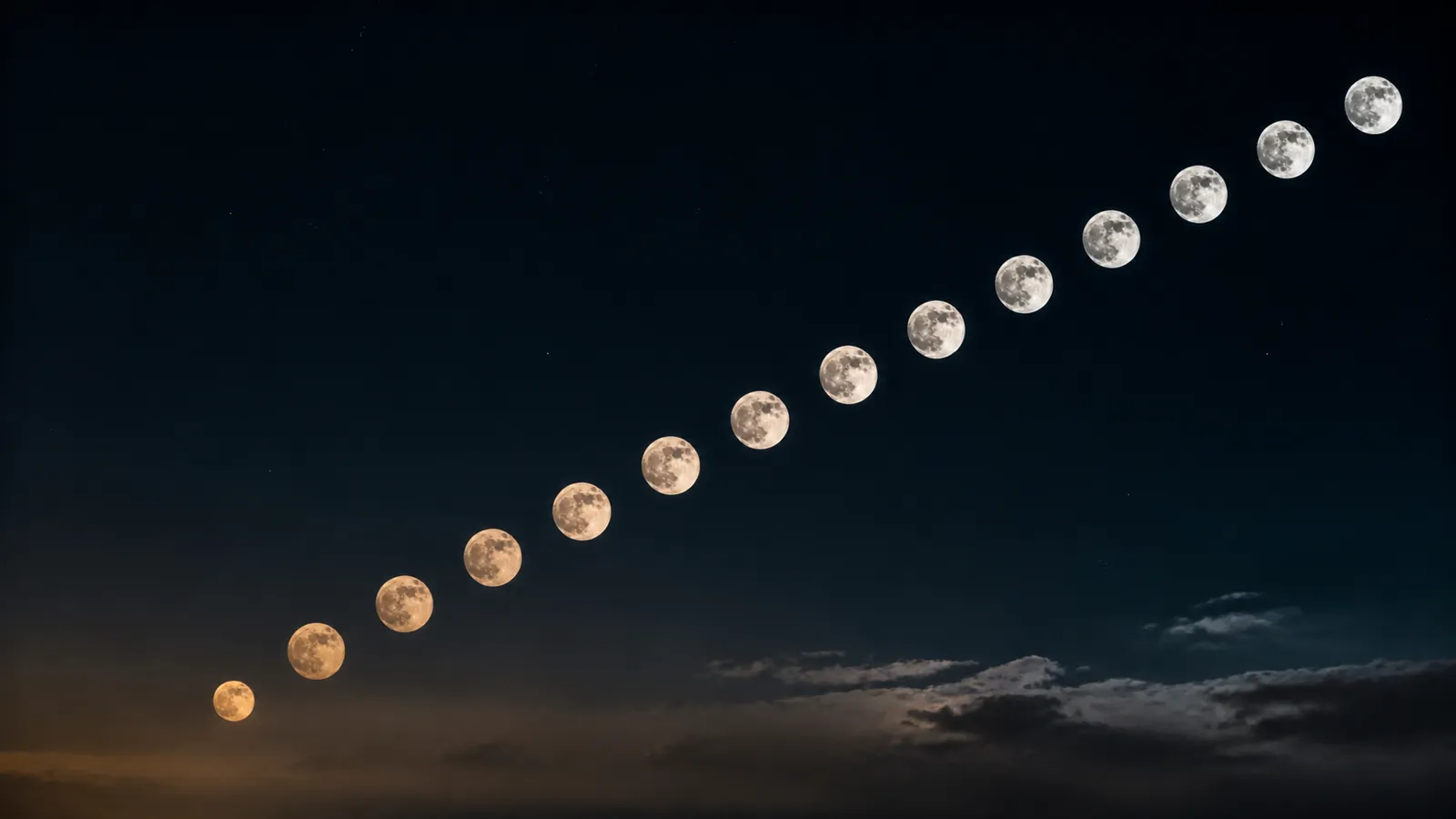
Plan the year
Full Moon dates in 2026, shown in IST
Exact astronomical phase moments, converted to India Standard Time.Imagegen illustration · calendar dates below are calculated data
-
Saturday · 3:33 PM IST · exact astronomical instant
-
Monday · 3:39 AM IST · exact astronomical instant
-
Tuesday · 5:08 PM IST · exact astronomical instant
-
Thursday · 7:42 AM IST · exact astronomical instant
-
Friday · 10:53 PM IST · exact astronomical instant
-
Sunday · 2:15 PM IST · exact astronomical instant
-
Tuesday · 5:26 AM IST · exact astronomical instant
-
Wednesday · 8:06 PM IST · exact astronomical instant
-
Friday · 9:48 AM IST · exact astronomical instant
-
Saturday · 10:19 PM IST · exact astronomical instant
-
Next up
Monday · 9:42 AM IST · exact astronomical instant
-
Tuesday · 8:23 PM IST · exact astronomical instant
-
Thursday · 6:58 AM IST · exact astronomical instant
Two different calendar ideas
Astronomical Full Moon and Purnima are not the same timestamp
An astronomical Full Moon is one worldwide instant when the Moon is opposite the Sun in ecliptic longitude. This page lists that instant in IST.
Purnima is a lunar tithi used in Hindu calendars. Its local start and end times—and the date chosen for an observance—can differ from the astronomical instant. This tool does not calculate tithi or prescribe observance dates.
How the calculation works
Methodology and sources
- Exact Full Moon instants: checked-in US Naval Observatory Astronomical Applications API dataset, API 4.0.1, converted from UTC to IST.
- Position, illumination and Delhi rise/set: SunCalc Ruby 1.2.0; the interactive map uses locally hosted SunCalc JavaScript 2.0.1.
- Angles are topocentric degrees. Altitude includes SunCalc's standard atmospheric-refraction correction; rise/set use the apparent Moon centre crossing 0° altitude.
- Source data generated . No astronomy API is called when you open this page.

Astronomy meets the SomRatri rhythm
Explore the next Full Moon SomRatri gathering
The astronomical Full Moon time above is not the gathering start time. Event dates, timing, venue and passes always belong to the current event page.
Questions
Full Moon calendar FAQ
Clear answers about dates, location and what this tool can—and cannot—tell you.When is the next full moon in Delhi?
The next astronomical Full Moon is 26 October 2026 at 9:42 AM IST. This is the exact phase instant, not an event start time.
Is an astronomical Full Moon the same as Purnima?
No. Astronomical Full Moon is a single instant defined by the Sun–Earth–Moon geometry. Purnima is a lunar tithi used by Hindu calendars and can begin and end at different local times.
Does the Moon map use my location automatically?
No. The map starts with Delhi. Your browser asks for permission only after you choose Use my location, and SomRatri does not store or transmit those coordinates.
Why can the Moon be below the horizon during a Full Moon date?
A Full Moon phase happens at one worldwide instant. Whether the Moon is above your local horizon then depends on your location and local time.
Does the map predict whether the Moon will be visible?
No. It calculates astronomical position. Buildings, trees, haze, clouds and weather can affect real-world visibility.